
Why Venezuela
The invasion of Venezuela and the abduction of its sitting President is only a piece of a long game America is playing while repositioning itself in a changing world

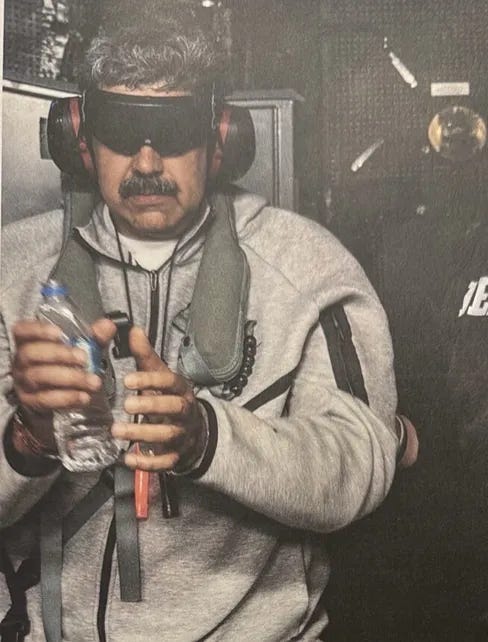
When the US invaded Iraq in 2003, Iraq was not the only target. The Americans wanted to go to Iran next, and then North Korea. But the US got stuck in Iraq with the country's descent into a bloody sectarian civil war -- and the situation in Afghanistan became worse year by year. As the US struggled to stabilise Iraq, Iran doubled down on its Axis network (which it hoped would provide it long-term deterrence.) North Korea was smarter. In 2006, the Kim regime went nuclear. The regime change project slowed down, but was never abandoned.
After the Arab Spring protests, Obama brought in regime change in Libya. The country, one of the most stable nations in Africa, has gone under the bus -- but nobody in the West bothers. They tried the same template in Syria but were initially checkmated by the Russians and the Iranians.
The fall of Assad in 2024 was a pivotal moment. Before that, the Iranian axis was weakened by sustained Israeli attacks. The Russians, who are now fighting their own war in their backyard, did nothing when their greatest ally in West Asia was swept away by a group of jihadists backed by Turkey (and indirectly Israel). Stripped of its deterrence, Iran lay vulnerable -- and Israel, joined in by Trump, tried to decapitate the Iranian regime in June 2025. They failed in doing so as Tehran recovered from the initial losses and retaliated with missiles, forcing Israel to accept a ceasefire on the 12th day of the war. But both the fall of Syria and the war on Iran exposed the vulnerabilities in the Russia-China-Iran axis. And then the US turned to Venezuela, a country with the world’s largest proven oil reserves on which Trump had set his sights in 2019 itself.
Let's look at the spheres of influence. The Americans realise that they are at this point overstretched-- from South America to Eastern Europe to West Asia and East Asia. The US wants to resize its strategic presence to prepare itself for a long great power competition with China. Trump wants to disengage from Europe which in his views has lost its strategic relevance. He is willing to settle the Ukraine war and enter a new normal with Russia. He wants to reshape the Western Hemisphere around American hegemony, and retain American influence in West Asia -- a region which China is dependent on for energy -- all while enhancing its presence in East Asia.
The aggression in Venezuela is the first application of the Donroe Doctrine (I have written about it in The Hindu on Jan 4). The US doesn't want to fight long ground wars in West Asia. But it has Israel in the region enforcing and maintaining the American order -- which favours Israel's expansionism as well. This can be done only if the Iranian regime, the only revisionist power in the region today, falls. So the strike and the kidnapping of the president of Venezuela is only one piece of a long game. America wants primacy in Latin America, while Israel and America will together seek to enforce their dominance in West Asia. This means, Israel would launch another attempt for regime change in Iran -- with direct American support.
But before that, it's to be seen whether Trump would be able to topple the Chavistas in Caracas and "run" Venezuela as he claimed he would. How is he going to run the country without deploying boots on the ground? Will Venezuelans quietly accept foreign occupation? Venezuela is now his war as much as Iraq was Bush's. (It's an irony that JD Vance, who built a political career based on his opposition towards the Iraq invasion and the globalism of neocons, is among the crowd cheering the aggression on Venezuela!) Or will Trump get stuck in the country like Bush and Obama did in Iraq?